

'Sōng' (松) - It's all about 'Relationship'


Both tai chi and qigong are opportunities to practise and change how we relate to anything outside ourselves, i.e. the rest of the world. This is possible when doing solo exercises, but becomes much more apparent when working in contact with someone else.
Sōng (松)

Sōng is our ability to become an empty vessel, where events that happen to us are allowed to pass through us, without our absorbing them. I've written about this in other blogs, but for me the concept is more far-reaching.
For me, Sōng is my ability to remain un-triggered by what happens to me. It's the ability to stay calm in the face of adversity; I'm not saying that I'm good at it!... It's something that I work on all the time.
Reaction

Further to this, we talk about 'reacting' to something.
'Reacting' is literally precisely that... RE & ACTING, in other words, repeating an action.
Re-action is not always unhelpful, quite the opposite in fact, e.g. in martial arts, an automatic response can help to protect you from a strike, but psychologically, re-action can also mean that you are acting (in the present) from a learnt response (from the past), which means that you are repeating a learned pattern and not actually in the present, and are therefore not fully sentient.
Relationship
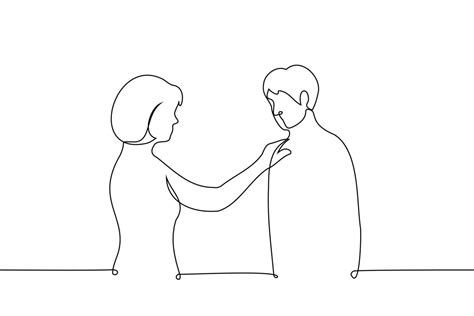
We tend to think of things happening TO us. If we judge those 'things' to be 'nice', we welcome them, and if we judge them as 'unwelcome', we resist them. However, we can alter how we relate to those things that happen to us, and whether or not we allow them to 'get to us'. We see happenings as two separate 'things'; there's the event itself, and then there's us and the way in which we deal with the event.
There is only conflict when we, and something that happens to us (the event), don't synchronise, and we resist. In these cases, when we don't like something that has happened, we want it to change so that it isn't what it is anymore, and therefore we can feel comfortable again.
But there is another alternative; we can alter our own perception/perspective and awareness.
perception /pər-sĕp′shən/ | The process or state of being aware of something. The process of perceiving something with the senses. |
perspective /pəˈspektɪv/ | A particular attitude towards something; a way of thinking about something. |
In other words, we can alter our own relationship to the event, still allowing it to be what it is, but altering our perception of it, or our perspective.
Relationship is a CREATIVE process

Any relationship, whether with another person, an animal, or in fact anything to which you relate (which is everything!), is a creative process.
We have the ability to alter how we respond to what we might call 'outside events' - the 'outside' being anything that isn't ourselves (although we can also alter how we respond to events within ourselves - e.g. pain).
When we respond via 're-action', communication is dead, not lively, we are re-watching a film of our behaviour.
When we alter our perception/perspective, and we don't try to change the event but allow ourselves to change, a door is opened to change and growth, and we don't reach a dead end.
Practising Relationship
The simplest way to try this out is to stay exactly where you are at this moment, standing or sitting, and notice what you are standing or sitting on.
You can't change the other part of the relationship, which in this case is the chair or the floor, but you can change how you contact it and respond to it.
So whether you are standing or sitting, start to feel the floor beneath your feet, and look at changing how your feet are sensing the floor, i.e. how they are relating to the floor.
If you are sitting, you can also do this with your sitting bones.
Pushing Hands, Martial Arts, & Dancing
This becomes very clear in tai chi pushing hands, other contact sports, and particularly in some types of dance.
In Push Hands, you can practise the art of relationship SO obviously.

If someone pushes you and you tense up, you literally become a pushover; you have to 'listen' to the slightest move that your practising partner makes, and respond to it accordingly - you don't re-act.
You are not like two bulls butting each other.

Dancing with a partner is an excellent example of this - you flow with the other person, but neither of you is anything without the other.
In both cases, you allow the other person to carry on with what they are doing, but without letting them 'get to you', i.e. control your core or your root, which would be the equivalent of upsetting your composure (which the dictionary describes as 'A calm or tranquil state of mind; self-possession').
You are therefore not a walk-over and you are not pushed around; you retain your integrity.

The crucial point here is that when something happens, you don't try to change the EVENT (i.e. what is happening to you), you change the part of you that relates to the event.
This could be the feel on your skin where the point of contact is with the other person, or it could also be the way in which you see/relate to the thing that is happening.
___________________________________________________
James Drewe teaches Tai Chi and Qigong in both London and in Kent and online.
Details of weekly classes both live and online can be found on the website, and there are classes for 2-person Tai Chi on one Saturday a month.
There is also learn both tai chi & qigong through a monthly subscription, and there are many free videos on YouTube.
CONTACT:
___________________________________________________


Comments